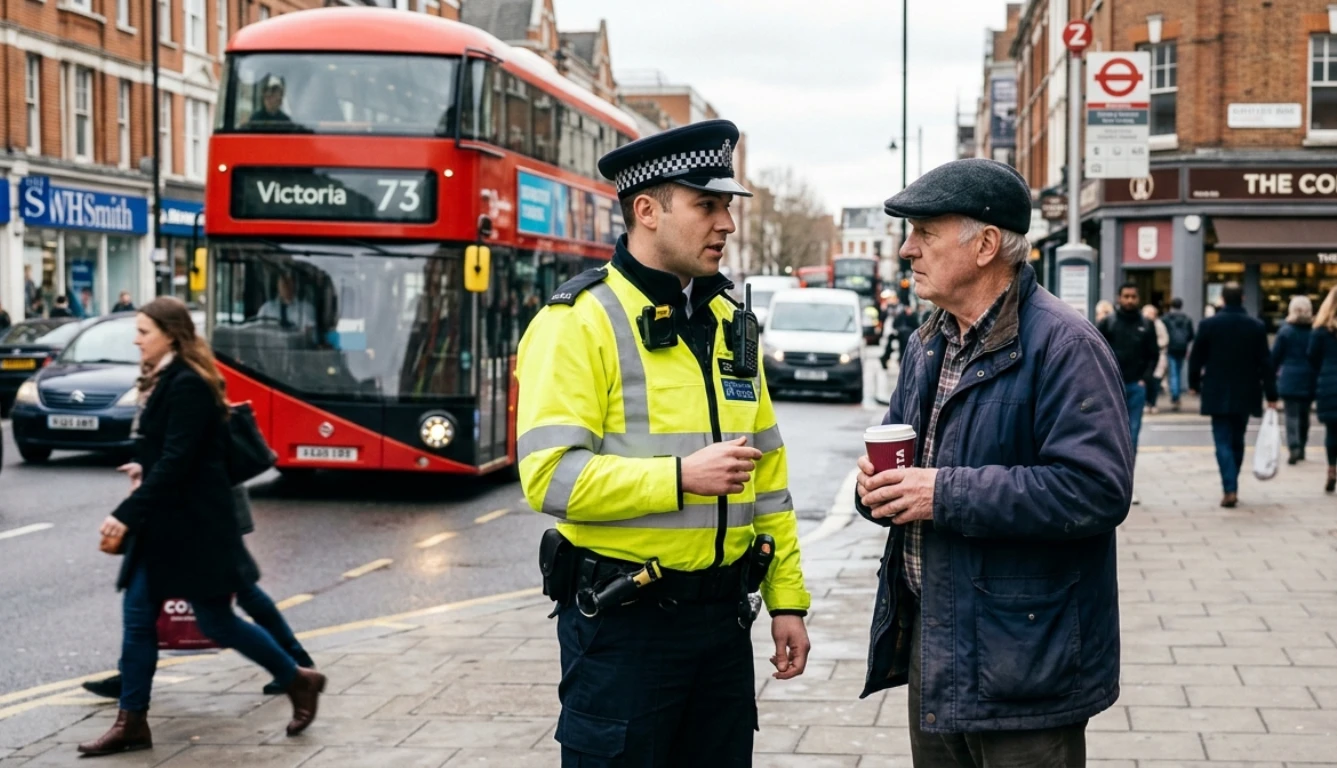
Most people assume that if a police officer asks for your name, you have to give it. It feels like the kind of thing that is simply true, like wearing a seatbelt or stopping at a red light. But the reality is more layered than that, and depending on where you are in Australia and what the circumstances are, your legal obligation to identify yourself can vary quite a bit. Getting this wrong, in either direction, can have real consequences, so it is worth understanding how the law actually works.
The General Rule: There Is No Universal Obligation
Australia has no single federal law that requires a person to identify themselves to police in all situations. There is no national “stop and identify” statute. What exists instead is a patchwork of state and territory legislation, each setting out its own conditions under which police can lawfully demand your name and address, and under which you are legally required to provide them.
The starting point, in most jurisdictions, is that police can speak to you as any member of the public can. They can approach you, ask you questions, and start a conversation. But that is not the same as a legal obligation to respond. The obligation to give your name and address only arises in specific, defined circumstances, and if those circumstances do not apply, you are generally within your rights to decline.
That said, it is worth being clear about something practical: even where you have the legal right to refuse, it is rarely a good idea to do so in a confrontational way. Staying calm, asking why your details are needed, and handling the situation politely is almost always the better approach. Your rights can be exercised, and complaints can be made, without the situation escalating on the street. This is particularly true if the interaction progresses further; knowing your boundaries is just as critical when understanding when police can search you in Western Australia and how to respond.
When You Generally Do Have to Identify Yourself
While the specific laws differ between states and territories, there are several situations that come up consistently across most jurisdictions where you will be required to provide your details.
The clearest of these is driving or being in charge of a vehicle. If you are stopped while driving, you are required by law to provide your name and address and to produce your licence. This applies across every state and territory without exception. Similarly, if police are issuing you an infringement notice or on-the-spot fine for any offence, you will generally need to identify yourself so that the notice can be properly issued.
If you have been formally arrested, you must provide your name and address. The same applies in most jurisdictions if police reasonably suspect you have committed, are committing, or are about to commit an offence. Being present in or near licensed premises such as pubs and clubs is another common circumstance where identification can be required, and in some states, being on or near public transport property brings similar obligations.
State and Territory Breakdown
New South Wales
In New South Wales, the relevant legislation is the Law Enforcement (Powers and Responsibilities) Act 2002, commonly known as LEPRA. Under section 11, police can require you to state your name and address if they have reasonable grounds to suspect you have committed or are about to commit an offence, or if they believe it is necessary to prevent a breach of the peace. Police can also request your details if they intend to issue a move-on direction under Part 14 of LEPRA, which requires a person to leave a specific place.
Importantly, police must tell you why they are asking for your details. If they are not in uniform, they must also produce identification showing they are a police officer. The penalty for refusing or providing false details is a fine of $220. If you are required to show photographic identification, police may ask you to remove a face covering, but they must first ask your permission and conduct the process with reasonable privacy.
Victoria
Victoria’s identification obligations sit within section 456AA of the Crimes Act 1958. A police officer can request your name and address if they believe on reasonable grounds that you have committed or are about to commit an offence, whether summary or indictable, or that you may be able to assist in the investigation of an indictable offence. The officer must tell you the grounds for their belief in sufficient detail for you to understand the nature of the suspected offence.
Protective Services Officers (PSOs) in Victoria have similar powers, but only when they are on duty at a designated place, typically train stations, courts, and Parliament House. The maximum penalty for refusing or giving false details is five penalty units. Drivers and public transport passengers must also provide identification when requested.
Queensland
Queensland’s framework is found in the Police Powers and Responsibilities Act 2000. Under section 40, police can require a person to state their name and address in prescribed circumstances set out in section 41. These include situations where a police officer finds a person committing an offence, reasonably suspects a person has committed or is committing an offence, and circumstances where a person may be able to assist with the investigation of a serious crime. Queensland’s legislation is relatively comprehensive in setting out the range of circumstances, and police must explain why they are making the request.
Western Australia
Western Australia operates under the Criminal Investigation (Identifying People) Act 2002. Under section 16 of that Act, police can request a person’s personal details in a range of circumstances, including where they reasonably suspect the person has committed or is about to commit an offence. Police may also ask a person to remove or adjust a face covering to verify their identity. If a person asks, the police officer must identify themselves. The obligation to provide name and address extends to situations involving vehicles, licensed premises, and being a witness to certain offences.
South Australia
South Australia’s obligations are set out under section 74A of the Summary Offences Act 1953. Police can require a person to give their personal details if an officer reasonably suspects that person has committed, is committing, or is about to commit an offence, or if they may be able to help with the investigation of an offence. Details that can be requested include name, address, date of birth, and in some circumstances involving offences against children, the name and address of any place where the person works or volunteers. The officer must identify themselves if asked.
Tasmania
In Tasmania, the position is broadly similar. A police officer can ask for your name and address if they believe you have committed an offence or are about to commit one. They can also ask if you are driving a vehicle, if you are in a licensed venue, or if they believe you are related to the investigation of an offence. If you are unsure why police want your details, you are entitled to ask politely, and they must have a valid reason. It is an offence to refuse or to provide false details once a lawful request has been made.
Australian Capital Territory
The ACT follows a comparable framework to other jurisdictions. Police can ask for your name and address if they reasonably suspect you have committed or are about to commit an offence, or if they believe you can assist with the investigation of a serious crime. Drivers must produce identification when stopped. The right to ask the officer for their own details applies here as it does elsewhere.
Northern Territory
In the Northern Territory, police operate under the Police Administration Act 1978. The identification obligations are broadly consistent with other states: police can require your name and address where they reasonably suspect offending has occurred or is occurring, where you are driving, or where other specific legislative circumstances apply. The NT has some additional powers in relation to public safety and designated areas, and police identification powers are exercised in a context where broader enforcement tools also exist.
What Counts as “Identifying Yourself”
It is useful to be precise about what police can actually ask for. Across all jurisdictions, the standard requirement is your name and address. Most states also permit police to request your date of birth. That is, broadly, the extent of it.
What police generally cannot compel is the production of a physical identity document. If you are not driving, there is no obligation to carry or produce a driver’s licence, passport, or any other form of ID. Police may ask you to show one, and doing so can resolve the situation quickly, but refusing to produce a document is not the same as refusing to give your name. The two should not be conflated.
Giving your name and address also does not mean you are obliged to answer further questions. Beyond your identifying details, you have the right to silence in most circumstances, and anything you do say can potentially be used against you. Knowing where that boundary sits is genuinely useful.
Consequences of Refusing to Identify
Where a lawful obligation to identify yourself exists and you refuse, the consequences are real. Most jurisdictions carry a financial penalty for non-compliance, typically a relatively modest fine, but the record of such a charge is not trivial. If you refuse and police are unable to confirm your identity by other means, you may be detained until your identity can be established, or you may be arrested. Because being taken into custody triggers a completely separate set of legal protections, it is vital to know your rights if arrested in Western Australia so you can navigate the situation safely.
Providing false details is treated as a more serious matter than simply refusing. In NSW, for example, the same $220 fine applies to both refusal and providing false information, but giving a false name or address to police can lead to a criminal charge with broader consequences. The same principle applies in South Australia, where it is explicitly an offence to give false personal details. Across all jurisdictions, fabricating your identity when lawfully required to give it is not worth the risk.
Where no lawful obligation exists, refusing to give your name and address cannot, by itself, result in a charge. If police ask for your details without having the requisite reasonable suspicion or other lawful basis, you are entitled to decline. However, the practical advice remains: politely ask why your details are needed, and if you are still unsatisfied, comply at the time and seek legal advice or make a formal complaint afterwards.
Your Rights During a Police Encounter
Understanding what you can and cannot be compelled to do is half the equation. The other half is knowing how to exercise those rights without making a bad situation worse.
You are entitled to ask a police officer why they are requesting your information. If the reason does not fall within the legal grounds for that jurisdiction, you can note this calmly. You can also ask the officer to identify themselves, including their name, rank, and station, and in most states they are obliged to provide this, either verbally or in writing if you ask. This information is useful if you later want to make a complaint.
Beyond your name and address, you have the right to silence. Police can ask you questions, but you are generally not obliged to answer them, and anything you do say can be used as evidence. The standard advice from most legal services is to provide your identifying details if lawfully required, and then exercise your right to silence until you have spoken to a lawyer.
If you are young, Indigenous, or otherwise feel you may be particularly vulnerable in a police encounter, many states have additional protections that apply. Legal aid services and community legal centres are available in every state and territory and can provide advice specific to your circumstances.
Knowing Where You Stand
The law on identifying yourself to police in Australia is not as simple as “yes, you always have to” or “no, you never do.” The honest answer is that it depends: on what state or territory you are in, on what the officer suspects or believes, and on the specific circumstances of the encounter.
What is consistent across all jurisdictions is that a lawful request carries a real obligation, and that providing false details is treated seriously. Equally consistent is that police do not have unlimited power to demand your identity, and where no lawful basis exists, neither refusal nor later complaint are without foundation.
The most sensible thing any person can do is know the basics of the law in their state, stay composed during any police encounter, and speak to a criminal lawyer promptly if they believe their rights have not been respected. This article provides general information only and should not be taken as legal advice. If you have concerns about a specific situation, getting advice from a qualified legal professional is always the right move.